Introduction
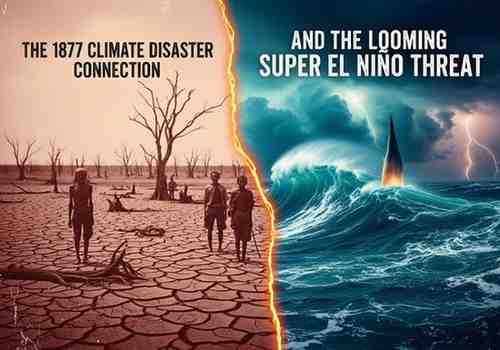
The specter of the 1877-78 Super El Niño—a climate event linked to global famines and millions of deaths—haunts climate science today. As the Pacific Ocean exhibits alarming warming trends, with sea surface temperatures potentially exceeding 3°C above average by 2026, scientists warn of a historic recurrence. For a climate-sensitive nation like India, where nearly 70% of annual rainfall depends on the fickle southwest monsoon, understanding this threat is not academic but existential. This answer analyzes the phenomenon, its potential impact on India, and the necessary preparedness measures.
1. Understanding El Niño and the ‘Super’ Variant
-
Mechanism: El Niño is a phase of the El Niño-Southern Oscillation (ENSO), characterized by the weakening of trade winds and abnormal warming of the central and eastern Pacific Ocean. This shifts global atmospheric convection patterns, disrupting normal weather systems.
-
Super El Niño Threshold: Scientists classify an event as “Super” when the Oceanic Niño Index (ONI) shows a temperature anomaly exceeding +2.0°C in the Niño 3.4 region.
-
Why Worse Now: Unlike 1877, today’s background climate is altered by global warming. Higher baseline ocean heat content and atmospheric moisture can amplify El Niño’s intensity and its teleconnections (far-reaching weather effects), making a future event potentially more destructive.
2. India’s Preparedness: Strengths and Gaps
| Aspect |
Strengths (Compared to 1877) |
Remaining Gaps |
| Early Warning |
IMD uses dynamic climate models (e.g., Monsoon Mission) for seasonal forecasts. |
Skill in predicting El Niño’s precise impact on regional rainfall distribution is still moderate. |
| Food Security |
Buffer food stocks (over 60 million tonnes under FCI) and MSP operations. |
High dependence on a few monsoon-affected districts for pulses & vegetables; storage losses. |
| Disaster Response |
NDRF, SDRF, and Heat Action Plans exist; Pradhan Mantri Fasal Bima Yojana (crop insurance). |
Low insurance penetration among small farmers; fragmented implementation of heat action plans. |
| Water Management |
Jal Shakti Abhiyan and Atal Bhujal Yojana for groundwater recharge. |
Overexploited aquifers; poor inter-state river linking and micro-irrigation coverage. |
3. Lessons from the 1877-78 Super El Niño: A Global Disaster
The 1877-78 event serves as a stark warning of cascading societal collapse:
-
Global Weather Chaos: It triggered severe droughts in India, China, Brazil, and Australia, while causing floods in the arid western coast of South America (Peru/Ecuador).
-
Humanitarian Catastrophe: The resulting agricultural failure led to the Great Famine in India (then under British rule), the
Month: Current Affairs - May 14, 2026
Category: