Cowbirds in North America lay eggs in the nests of songbirds.
Honeyguide birds in Africa exploit other species to raise their young.
Black-headed ducks in South America practice obligate brood parasitism.
Even outside birds, the cuckoo catfish tricks other fish into caring for its offspring.
These examples show that what humans label as “laziness” is often an efficient evolutionary solution to environmental challenges.
Lazy or Intelligent? Rethinking the Label
Calling the cuckoo lazy reflects a human moral judgement rather than scientific reality. In nature, success is measured by survival and reproduction, not effort or fairness. The cuckoo excels on both counts.
By outsourcing parental care, it conserves energy, reduces risk, and maximises reproductive output. This strategy allows cuckoos to thrive across diverse habitats and continents, proving their evolutionary success.
Lessons from the Cuckoo
The cuckoo challenges conventional ideas about effort and productivity. It demonstrates that survival does not always favour the hardest worker, but often the most adaptable strategist. Nature rewards efficiency, not morality.
In a broader sense, the cuckoo reminds us that intelligence in the natural world can be subtle, indirect, and unconventional. What appears to be laziness may, in fact, be the result of millions of years of evolutionary refinement.
Conclusion
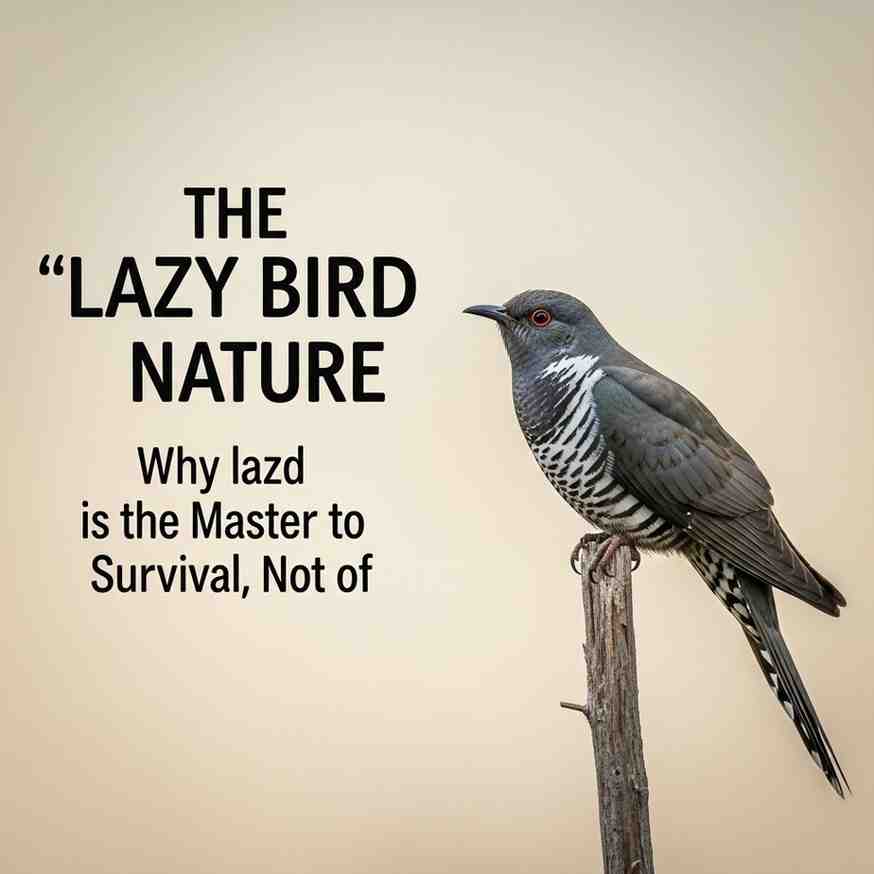
The cuckoo, popularly known as the “Lazy Bird”, is anything but lazy. Its reliance on brood parasitism represents one of the most ingenious survival strategies in nature. By redefining effort through adaptation rather than labour, the cuckoo stands as a powerful example of how evolution favours innovation over exertion. In the wild, success belongs not to those who work the hardest, but to those who learn how to work smartest.
Month: Current Affairs - December 30, 2025
Category: