| Discovery made by |
CSIR-National Geophysical Research Institute (NGRI), Hyderabad |
| Location |
Prayagraj to Kanpur stretch, Uttar Pradesh |
| Depth below surface |
10 to 15 metres |
| Length |
Nearly 200 km |
| Width |
4 to 5 km |
| Water storage capacity |
3,500 to 4,000 million cubic metres |
| Number of MAR sites identified |
More than 150 |
| Initial sites for development |
20 to 25 |
| Confluence of Ganga and Yamuna |
Triveni Sangam at Prayagraj |
Exam-Focused Points
-
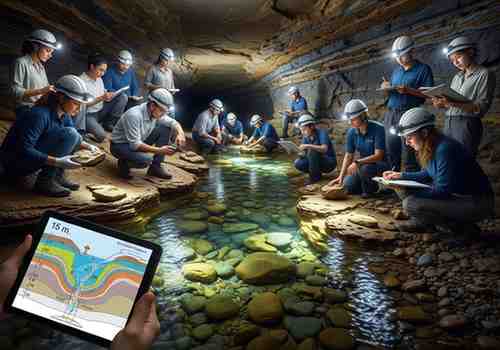
A palaeo-channel is an old, buried river course.
-
The buried channel lies 10–15 metres below the surface.
-
It runs for 200 km from Prayagraj to Kanpur .
-
Scientists used airborne geophysical surveys (helicopters) and drilling to find it.
-
Drilling locations included Sarai Akil, Sirathu, Manjhanpur, Fatehpur, and Balwant Tola .
-
The channel still holds water – 3,500 to 4,000 million cubic metres .
-
Managed Aquifer Recharge (MAR) sites will help store more water.
-
The buried river may be linked to the Saraswati River , but more evidence is needed from the Himalayas.
-
CSIR-NGRI is based in Hyderabad .
Frequently Asked Questions (FAQ)
Q1: What is a palaeo-channel?
A: A palaeo-channel is an ancient river course that got buried under sand, silt, or groundwater over time.
Q2: Where is this underground river located?
A: It lies between Prayagraj and Kanpur in Uttar Pradesh, about 10 to 15 metres below the ground.
Q3: How much water can this buried channel store?
A: It can store nearly 3,500 to 4,000 million cubic metres of water.
Q4: How did scientists confirm it was an old river?
A: They drilled at several places and found sandy deposits that match ancient riverbed material.
Q5: Is this the same as the Saraswati River?
Month: Current Affairs - May 17, 2026
Category: Underground River – Prayagraj to Kanpur