to this pressure:
-
Geopolitical tensions around the world
-
Stronger US dollar trends
-
Risk aversion in global markets
-
Capital flow volatility (money moving in and out of India)
A weaker rupee can increase import costs. It can also push up inflation pressure. The RBI wants to manage this carefully.
Reason 2: Liquidity Management Needs
The banking system needs adequate liquidity. Without enough liquidity, credit flow can get stuck. Short-term interest rates can become unstable. Market functioning can become disorderly. This swap will help inject durable liquidity. Durable means long-lasting, not temporary short-term funds.
Reason 3: Global Financial Uncertainty
Central banks around the world remain cautious. There are still inflation risks. Geopolitical shocks keep happening. Capital markets remain volatile. The RBI is acting early to keep India’s financial system stable.
RBI’s Broader Monetary Strategy
Forex swaps are one of several liquidity tools available to the RBI. Other tools include:
-
Repo operations – Short-term loans to banks
-
Reverse repo operations – Absorbing excess liquidity from banks
-
Open market operations – Buying or selling government securities
-
Cash Reserve Ratio (CRR) adjustments – Changing the portion of deposits banks must keep with RBI
Compared with direct interventions, swap auctions allow targeted liquidity management with less disruption. They do not disturb the foreign exchange market too much. They also do not send strong signals like a rate cut or hike.
Exam-Focused Points
-
Announcement: RBI will conduct $5 billion USD-INR buy/sell swap auction
-
Date of auction: May 26 (three-year tenor)
-
Purpose: Inject long-term liquidity into banking system
-
Trigger factors: Rupee weakness, global uncertainty, external market volatility
-
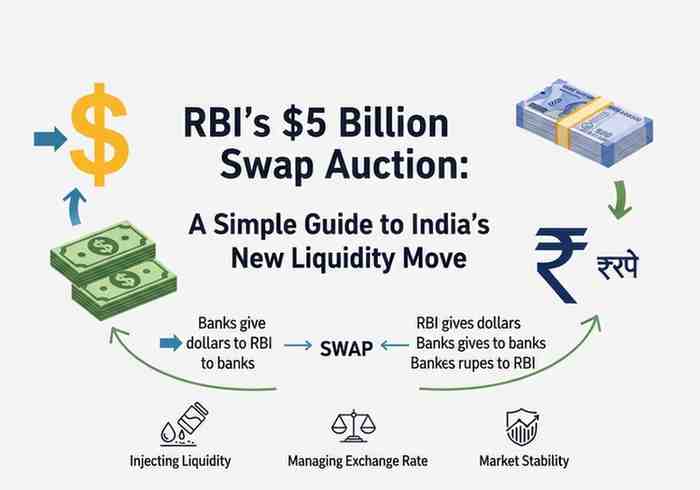
How it works: Banks sell dollars to RBI now, get rupees, commit to buy back dollars after three years
-
Minimum bid: USD 10 million
-
Additional bids: Multiples of USD 1 million
-
Premium quotes: In paisa up to two decimal places
-
Key benefit: Durable liquidity without changing benchmark interest rates
-
Other RBI liquidity tools: Repo, reverse repo, open market operations, CRR adjustments
-
Risks addressed:
Month: Current Affairs - May 21, 2026
Category: RBI Monetary Policy