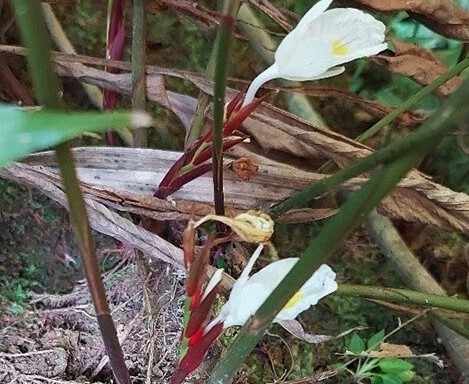
New Ginger Species Discovered in Arunachal Pradesh’s Siang Valley
The discovery of a new ginger species, Parakaempferia alba , in the Siang Valley of Arunachal Pradesh has once again drawn global attention to the exceptional biological wealth of the Eastern Himalayas. This finding reinforces the region’s status as one of the world’s most important biodiversity hotspots and highlights how much of its natural heritage is still scientifically unexplored.
Discovery and Scientific Recognition
The species has been formally documented in the Nordic Journal of Botany , giving the discovery international scientific visibility. The research was conducted by a team of Indian botanists—Tatum Mibang, Bipankar Hajong, Devpratim Koch, and Pankaj Bharali—whose work adds a valuable new entry to India’s botanical records. Researchers involved have noted that such findings underline the urgent need for sustained and systematic plant exploration in the Eastern Himalayan landscape.
Habitat and Ecological Context
Parakaempferia alba was located in the Miglung area of Siang Valley , within East Siang district of Arunachal Pradesh . The species grows at relatively low elevations, between 150 and 400 metres, and is closely associated with shaded streambanks. Its preference for humid conditions and sandy soils points to its dependence on delicate microhabitats that are tightly linked to forest cover and freshwater systems.
Taxonomy and Scientific Importance
Belonging to the ginger family, the new species expands the known diversity of the genus Parakaempferia . Members of this plant group are well known for their culinary, medicinal, and economic significance. The identification of P. alba not only enriches taxonomic knowledge but also strengthens the view that the Siang Valley and surrounding forests host many plant species yet to be described by science.
Why the Eastern Himalayas Matter
The discovery adds further evidence to the global importance of the Eastern Himalayas . This region supports extraordinary levels of plant and animal diversity, much of it endemic, owing to its complex terrain, varied climate, and long evolutionary history. However, it is also under increasing pressure from habitat alteration, infrastructure development, and climate-related stress.
Conservation and Future Potential
While the medicinal or economic applications of Parakaempferia alba are yet to be studied in detail, scientists believe the species may hold untapped potential. More importantly, its discovery draws attention to the need for conserving forested streamside ecosystems, which are among the most vulnerable habitats in the Eastern Himalayas. Protecting such environments is crucial not only for safeguarding newly discovered species but also for maintaining the ecological balance of the region.
Key Points for Exam Preparation
-
Parakaempferia alba is a newly identified ginger species from Arunachal Pradesh.
-
It was discovered in the Siang Valley, part of the Eastern Himalayas.
-
The finding was published in the Nordic Journal of Botany .
-
The Eastern Himalayas are recognised globally as a biodiversity hotspot.
-
Botanical discoveries play a vital role in conservation planning and ecological assessment.
Month: Current Affairs - January 21, 2026
Category: Environment & Biodiversity | Indian Geography