Composition (what elements are present)
Temperature
Motion
Other physical properties
The scientists measured 23 chemical species in the 20 stars. They found matching elemental ratios across many stars. In astronomy, matching chemical fingerprints means the stars likely share a common origin . That origin may be the lost dwarf galaxy Loki.
The stars studied are metal-poor stars . “Metal-poor” means they have very few elements heavier than helium. Such stars are very old. They were born in the early universe.
WHAT IF LOKI IS CONFIRMED?
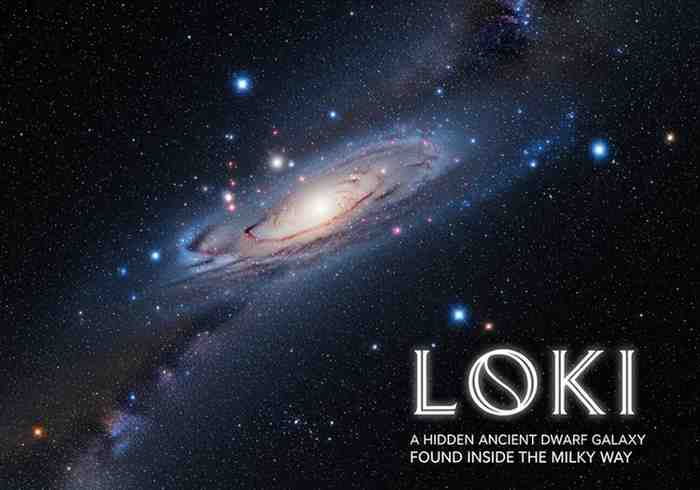
If other scientists confirm this finding, Loki will become a new addition to the list of dwarf galaxies that the Milky Way has absorbed. This study is important because it links stellar chemistry with galaxy merger history. It helps us understand how our galaxy grew up.
FAQ (FREQUENTLY ASKED QUESTIONS)
Q1: What is the name of the proposed hidden dwarf galaxy?
A: Loki.
Q2: In which journal was the study published?
A: Monthly Notices of the Royal Astronomical Society (May 2026).
Q3: How many stars were studied to find evidence of Loki?
A: 20 metal-poor stars.
Q4: What is a prograde orbit?
A: Movement in the same direction as the Milky Way’s rotation.
Q5: Name two other dwarf galaxies that the Milky Way has absorbed.
A: Gaia-Enceladus and Kraken (also Sequoia and Thamnos).
EXAM-FOCUSED POINTS
-
Proposed dwarf galaxy name: Loki
-
Publication: Monthly Notices of the Royal Astronomical Society, May 2026
-
Evidence from: 20 metal-poor stars within 2 kiloparsecs of the Sun
-
Orbital mix: 11 prograde + 9 retrograde orbits
-
Prograde: Same direction as Milky Way’s rotation
-
Retrograde: Opposite direction
-
Chemical clues: Traces from supernovae and neutron star mergers; no white dwarf activity
-
Instrument used: ESPaDOnS (high-resolution spectropolarimeter)
-
Spectroscopy: Study of light to determine composition, temperature, motion
-
Metal-poor stars: Old stars with few elements heavier than helium
-
Neutron star mergers: Major source of heavy elements (gold, platinum)
-
Other absorbed dwarf galaxies: Gaia-Enceladus, Sequoia, Thamnos, Kraken
-
Process: Hierarchical galaxy formation (galaxies grow by merging)
Month: Current Affairs - May 12, 2026
Category: MilkyWay