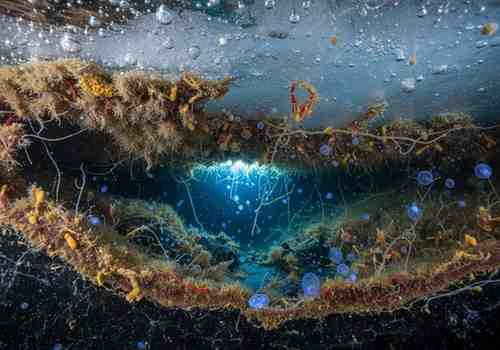
icy worlds.
Exam-Focused Points
-
Location: Ross Ice Shelf, Antarctica (largest ice shelf).
-
Environment: Dark, cold, isolated from sunlight.
-
Microbes found: Aerobic lithoautotrophic archaea & bacteria, heterotrophic microbes.
-
Energy source: Chemosynthesis (ammonium, nitrite, sulfur compounds).
-
First study published: 2022 in Nature Communications .
-
Second study: 2024 – functional microbial community described.
-
Methods used: Metagenomics (DNA) and metatranscriptomics (RNA activity).
-
Viruses present: Infect chemolithoautotrophic organisms; control populations.
-
Ammonium oxidation rates: Comparable to winter Antarctic Ocean.
FAQ
Q1: Where were these microbes found?
A: Hundreds of metres beneath the Ross Ice Shelf in Antarctica.
Q2: How do they get energy without sunlight?
A: Through chemosynthesis, using chemicals like ammonium and sulfur.
Q3: When was the first study published?
A: In 2022 in the journal Nature Communications .
Q4: What scientific methods were used?
A: Metagenomics (studying DNA) and metatranscriptomics (studying active RNA).
Q5: Why are viruses important in this ecosystem?
A: They infect microbes, control their populations, and help recycle nutrients.
Month: Current Affairs - May 20, 2026
Category: RossIceShelf Antarctica