Cultural Importance
In the state of Odisha, these turtles hold a special cultural and religious significance. They are commonly kept in temple ponds, where they are considered sacred and are protected by local traditions.
Major Threats to Survival
Despite its protected status, the Ganges soft-shell turtle faces a growing number of dangers:
-
Habitat Alteration and Destruction: Dam construction, sand mining, and river pollution are degrading its natural home.
-
Poaching and Illegal Trade: The turtles are captured and illegally traded for their meat and for use in traditional medicines.
-
Agricultural Expansion: The conversion of land near riverbanks for farming leads to habitat loss and increased human-animal conflict.
-
Commercial Exploitation: Unregulated fishing practices, including the use of gill nets, often result in the accidental drowning of these turtles.
Conservation Status
The Ganges soft-shell turtle is recognized as a species in need of urgent protection at both the international and national levels.
| Protecting Body |
Status |
| IUCN Red List |
Endangered |
| Wildlife Protection Act, 1972 (India) |
Schedule I |
Being listed under Schedule I of the Wildlife Protection Act, 1972, grants this turtle the highest level of legal protection in India, making its capture, trade, or harm a serious offense.
Key Exam-Focused Points for Students
-
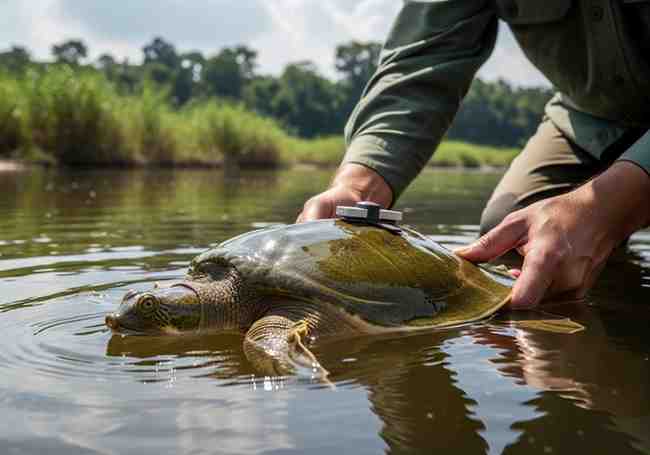
First Satellite-Tagged Release: India’s first satellite-tagged Ganges soft-shell turtle was released in Kaziranga National Park & Tiger Reserve, Assam .
-
Park Area: Kaziranga covers 1,302 sq. km .
-
Scientific Name: Nilssonia gangetica
-
Common Name: Also known as the Indian softshell turtle.
-
Habitat: Prefers deep rivers, streams, canals, lakes, and ponds with sandy or muddy bottoms.
-
Global Distribution: Found in Afghanistan, India, Bangladesh, and Pakistan.
-
Key River Basins in India: Indus, Ganges, Brahmaputra, Yamuna, Narmada, and Mahanadi.
-
Diet: Omnivorous (eats fish, insects, plants, carrion, etc.).
-
Breeding Season: February to April.
-
IUCN Status: Endangered
-
Indian Legal Status: Schedule I
Month: Current Affairs - May 17, 2026
Category: Ganges Soft-Shell Turtle