For a retired person living on fixed savings, rising prices are a worry. The economy is not just numbers. It affects real people’s lives. The RBI has to balance growth and inflation carefully. It is a difficult job.
What Happens Next?
The next MPC meeting is scheduled for August 2026. By then, there will be more data on the monsoon, global oil prices, and the West Asia situation. If inflation rises above 5.5%, the RBI may start raising rates. If growth slows sharply, it may cut rates. For now, the central bank has chosen to wait and watch. The neutral stance gives it flexibility.
Exam-Focused Points
-
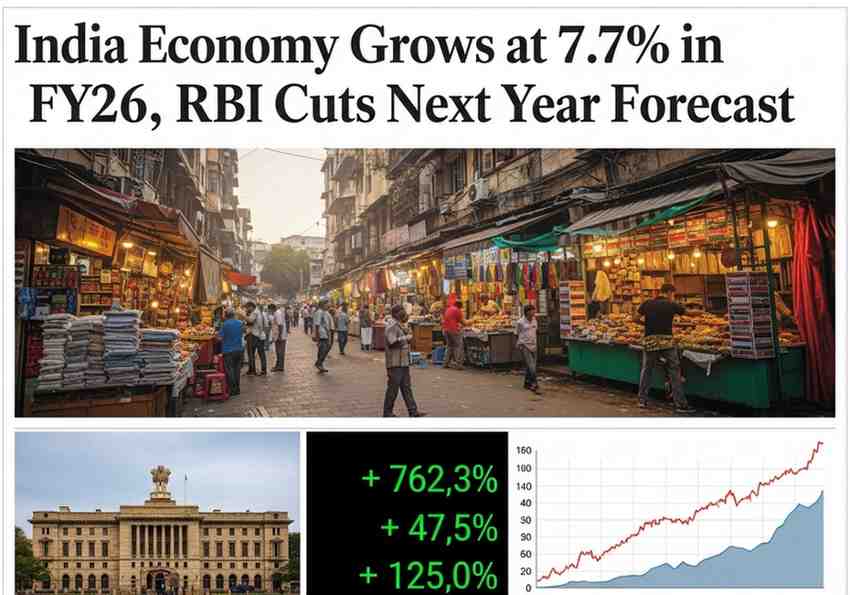
GDP growth FY26: 7.7%
-
GDP growth Q4 FY26 (Jan-Mar 2026): 7.8%
-
Real GVA growth FY26: 7.9%
-
RBI GDP forecast FY27: 6.6% (lowered from 6.9% in April 2026)
-
RBI inflation forecast FY27: 5.1% (raised from 4.6% in April 2026)
-
Repo rate: Unchanged at 5.25% (12th consecutive meeting)
-
Policy stance: Neutral
-
MPC meeting date: 5 June 2026
-
MPC members: 6 (decides repo rate under RBI Act, 1934)
-
Reasons for lower growth forecast: West Asia conflict risks, energy prices, supply disruptions, weather uncertainties
-
Reasons for higher inflation forecast: Food price uncertainty, second-round effects
Frequently Asked Questions (FAQ)
Q1: What is India’s GDP growth for FY 2025-26?
A: India’s GDP grew by 7.7% in the full financial year 2025-26. In the fourth quarter (January-March 2026), growth was 7.8%.
Q2: Did the RBI change the repo rate on 5 June 2026?
A: No. The RBI’s Monetary Policy Committee kept the repo rate unchanged at 5.25% for the 12th time in a row.
Q3: What is the RBI’s growth forecast for FY27?
A: The RBI lowered its forecast to 6.6% from 6.9% because of risks from the West Asia conflict, energy prices, supply disruptions, and weather.
Q4: What is the RBI’s inflation forecast for FY27?
A: The RBI raised its inflation forecast to 5.1% from 4.6% due to food price uncertainty and second-round effects.
Q5: What does a neutral policy stance mean?
A: A neutral stance means the RBI is not signalling whether it will raise or cut rates in the near future. It will decide based on incoming data.
Month: Current Affairs - Jun 06, 2026
Category: IndiaGDPFY26-MonetaryPolicy