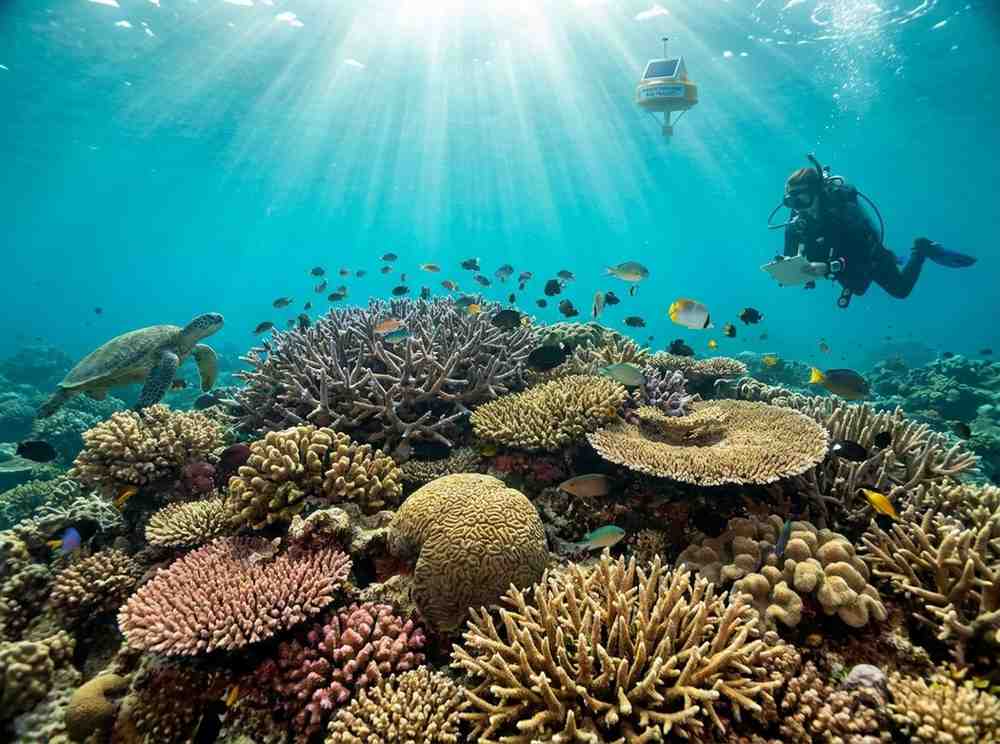
India's initiatives: Coral Bleaching Alert System (INCOIS), Artificial Reef Installation, Coral Translocation Project, PMMSY.
Blue Park: A marine protected area recognised for effective conservation.
Frequently Asked Questions (FAQs)
Q1: What are coral reefs?
A: Coral reefs are marine ecosystems formed by coral polyps. They support a high level of biodiversity in shallow tropical waters. They are often called the "rainforests of the sea."
Q2: What is coral bleaching?
A: Coral bleaching is a process in which corals lose their symbiotic algae due to stress from changes in temperature, light, nutrients, or pollution. This causes them to turn completely white and become weakened.
Q3: What are climate-resilient reefs?
A: Climate-resilient reefs are reefs that can survive or recover faster from ocean warming due to genetic adaptation, favourable conditions, or natural cooler microclimates.
Q4: Why are coral reefs important?
A: Coral reefs support about 25% of all marine biodiversity. They also protect coastlines from erosion and support fisheries and tourism.
Q5: What is a Blue Park?
A: A Blue Park is a marine protected area that is recognised for effective conservation and biodiversity protection. The Blue Park Award is given to areas that meet strict scientific standards for conservation.
Month: Current Affairs - Jun 19, 2026
Category: CoralReefs-ClimateResilience