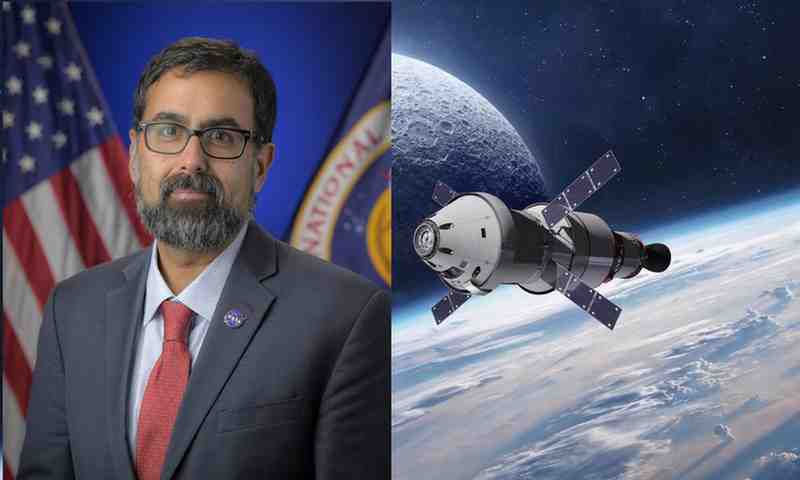
Amit Kshatriya has become one of the key figures driving the United States’ return to the Moon. As a senior leader at NASA, he sits at the intersection of mission strategy, execution, and long-term planning. His work is closely tied to the Artemis programme, which is not just about revisiting the Moon, but about building a sustained human presence beyond Earth.
Why Artemis II Matters
Artemis II is more than just another space mission. It is NASA’s first crewed lunar mission since the Apollo era, and its success signals that the U.S. is technically and operationally ready to move toward human landings again.
- It was a crewed lunar flyby , meaning astronauts travelled around the Moon and returned safely without landing.
- The mission ended with a splashdown near San Diego , validating spacecraft systems, crew safety, and mission coordination.
- It acts as a critical test run for upcoming missions like Artemis III, which aims to land humans on the Moon.
Kshatriya’s role here was not symbolic. As Associate Administrator and advisor, he was involved in aligning engineering, operations, and mission objectives. In simple terms, he helped ensure that thousands of moving parts worked as one system.
What He Actually Does at NASA
His position isn’t about designing a single spacecraft or running a single mission. It’s broader and more strategic.
- Works directly with NASA leadership on mission planning and execution
- Helps coordinate Moon-to-Mars exploration strategy
- Bridges engineering teams, mission control, and policy-level decisions
This kind of role requires both technical depth and systems thinking, something that comes from years of operational experience.
From Mission Control to Leadership
Kshatriya’s career path is a textbook example of how deep technical roles evolve into strategic leadership.
Early Career
- Started outside NASA in oil & gas and healthcare , building analytical and systems skills
- Entered NASA’s ecosystem in 2003 through contracting roles
Core NASA Experience
- Worked on spacecraft operations and robotics
- Played a role in International Space Station (ISS) assembly
Flight Director Phase (2014–2017)
- Served as an ISS Flight Director , one of the most demanding roles at NASA
- Responsible for:
- Real-time mission decisions
- Astronaut safety
- Coordination across global teams
This phase is critical. Flight Directors are trained to make high-stakes decisions under pressure, which often shapes future leaders.
Transition to Headquarters
Month: Current Affairs - April 11, 2026
Category: NASA’s Lunar Comeback