wings
Compared to other species in the genus |
| Sensory organs |
Simple, un-split, short on back legs |
| Back texture |
Heavily sculptured with tiny trombone-shaped pillars |
| Tardigrade nicknames |
Water bears, moss-piglets |
| Number of known tardigrade species |
About 1,300 |
| Marine tardigrade share |
17% of all tardigrade species |
| Tardigrade size |
0.05 mm to 1.2 mm |
| Legs per body |
Four pairs, each ending in 4–8 claws |
| Survival state |
“Tun” state – body dries out, metabolism drops to 0.01% |
| Can survive |
Heat, cold, UV radiation, outer space |
FAQs
Q1: What is Actinarctus odissi?
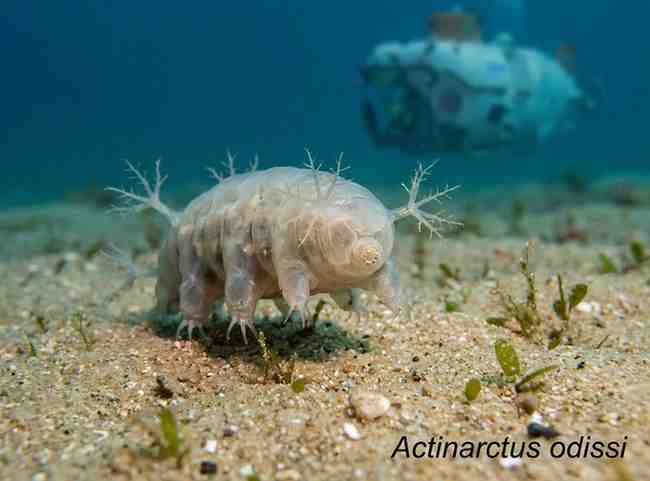
Ans: Actinarctus odissi is a newly discovered species of tardigrade (marine water bear).
Q2: Where was Actinarctus odissi discovered?
Ans: It was discovered in the shallow marine waters of the Bay of Bengal near Markandi in Odisha.
Q3: What is the body shape of Actinarctus odissi?
Ans: It has a dome-shaped body.
Q4: What are tardigrades commonly called?
Ans: Tardigrades are commonly called “water bears” or “moss-piglets.”
Q5: How long can tardigrades survive in the tun state?
Ans: They can survive as tuns for years or even decades.
Month: Current Affairs - May 25, 2026
Category: Environment, Biodiversity