This means a farmer must wait 4-5 years after planting before the trees start giving fruit. The fruit comes in bunches called fresh fruit bunches (FFB).
A very important point: fresh fruit bunches must be processed within 24-48 hours after harvest . If they are not processed quickly, the oil quality drops. This means oil palm mills must be located close to plantations.
The crop requires high water and nutrient input . It needs more than double the water of marginal rice cultivation annually. This can be a problem in water-scarce areas. Other constraints include soil fertility depletion, reduced access to land for smallholders, and higher use of agro-chemicals .
Andhra Pradesh: The Leading State
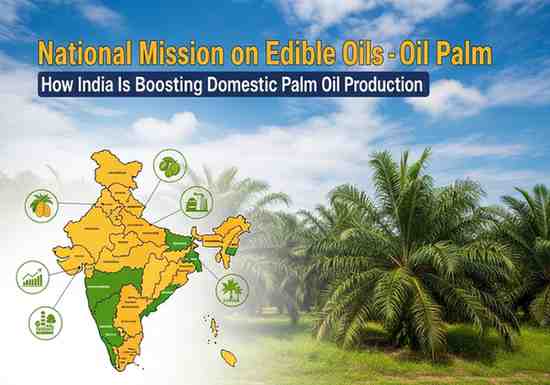
Andhra Pradesh accounts for about 80% of India’s CPO production. The state has been very successful in oil palm cultivation. Between 2010 and 2023, Andhra Pradesh expanded its oil palm cultivation by about 122% . Other states with oil palm cultivation include Telangana, Kerala, Karnataka, Tamil Nadu, Odisha, and parts of northeastern India.
Pricing Mechanism: Formula Price and Viability Price
The government uses a twin-pricing mechanism to protect oil palm farmers. The first is a monthly Formula Price . This is based on international CPO prices. The second is an annual fixed Viability Price . If the Formula Price falls below the Viability Price, the government pays the difference to farmers. This ensures that farmers do not lose money when global prices drop.
Global Supply Factors: Indonesia and Malaysia
Indonesia and Malaysia are the world’s largest palm oil exporters. Both countries are now diverting more palm oil for biodiesel blending programmes . This means less palm oil is available for export. Global availability may decrease. Prices may rise. India’s import exposure could become a bigger problem. This is another reason why India must increase its own palm oil production through missions like NMEO-OP.
A Human Touch: The Oil Palm Farmer
Imagine a small farmer in Andhra Pradesh. Five years ago, he planted oil palm saplings on his two-acre plot. He borrowed money for drip irrigation and fertilisers. For four years, he had no income from the crop. He grew vegetables in between the young trees to survive. Now, the trees are giving fruit. He harvests fresh fruit bunches every 10-15 days. A truck from the nearby mill arrives within 24 hours to take the bunches. He gets a fair price because of the government’s viability price. His family’s life is improving. He is proud to be helping India reduce its oil imports. This is the story that NMEO-OP is trying to multiply across the country.
Exam-Focused Points