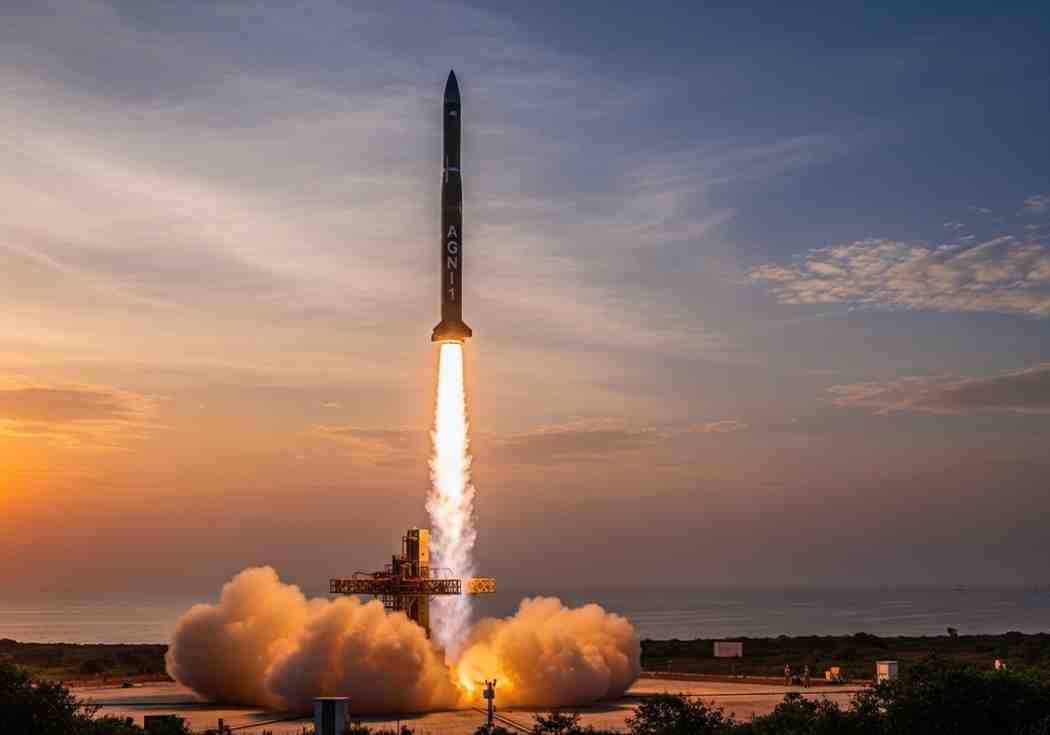
because missiles can be launched over the Bay of Bengal, away from populated areas. Earlier in May 2026, India also conducted a successful flight-trial of an advanced Agni missile with a Multiple Independently Targetable Re-Entry Vehicle (MIRV) system from Dr. APJ Abdul Kalam Island in Odisha. That test showed India’s growing capability to hit multiple targets with one missile.
Role of the Strategic Forces Command
The Strategic Forces Command (SFC) is a tri-service command of the Indian Armed Forces. It includes personnel from the Army, Navy, and Air Force. The SFC is responsible for managing and operating India’s strategic nuclear arsenal. It controls the delivery systems, including ballistic missiles like Agni-1. The command ensures that all nuclear-capable systems are ready for use if needed. It also conducts regular training launches to keep the systems and personnel prepared. The Agni-1 test on 22 May 2026 was one such training launch. The SFC confirmed that the missile met all its operational and technical parameters.
Why This Test Matters
Missile tests serve several important purposes. First, they check the reliability and accuracy of the weapon system. Second, they train the personnel who will operate the missiles in real situations. Third, they send a message to potential adversaries that India’s deterrent is strong and ready. The Agni-1 test was successful. It showed that India’s short-range ballistic missile system is in good working order. This adds to India’s overall national security. The test was also transparent. India follows a policy of no-first-use of nuclear weapons. Tests like these are part of maintaining a credible minimum deterrent.
A Human Touch: The Scientists Behind the Success
Behind every successful missile test are hundreds of scientists, engineers, and technicians. They work for months to prepare for a single launch. On 22 May 2026, at Chandipur, the atmosphere was tense but focused. The countdown began. Then, the missile roared to life. It rose into the sky, leaving a trail of smoke. Tracking radars followed its path. Within minutes, the mission was over. The scientists cheered. For them, it was another day of hard work paying off. Many of them have spent years perfecting the Agni series. Their dedication keeps the nation safe.
Exam-Focused Points
| Topic |
Key Details |
| Missile name |
Agni-1 |
| Type |
Short-range ballistic missile (SRBM) |
| Launch date |
22 May 2026 |
| Launch location |
Integrated Test Range, Chandipur, Odisha |
| Conducted under |
Strategic Forces Command |
| Range |
700 – 900 km |
| Payload |
Up to 1,000 kg |
| Stages |
Single-stage
Month: Current Affairs - May 23, 2026
Category: Defence, Science - Technology
|